
Studio Apartments Layouts / July 19, 2026
Work-From-Home Studio Apartment Setup Ideas
Create a comfortable work zone in a studio apartment without letting the desk dominate the sleeping and living…
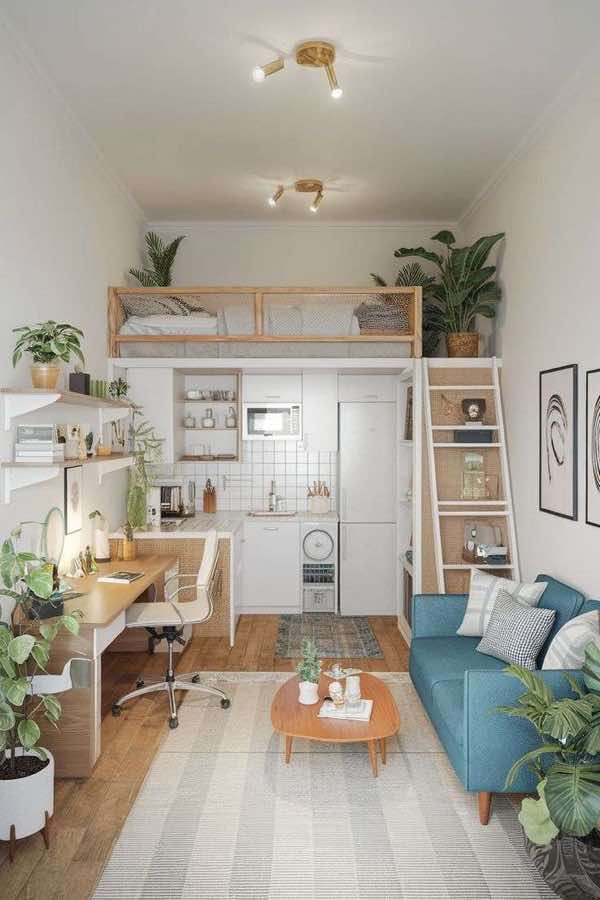 Apartment Lift Up / guide
Work from home studio apartment setup ideas becomes much easier when every decision starts with measurements, daily routines, and the limits of the room. Create a comfortable work zone in a studio apartment without letting the desk dominate the sleeping and living areas. This guide focuses on changes that look intentional, remain practical, and suit apartments where permanent remodeling may not be possible.
Small rooms are sensitive to scale. A piece that is only a few inches too deep can interrupt a walkway, block light, or make storage harder to reach. Before buying anything, note the room dimensions and photograph each wall. Then identify the single problem that causes the most friction. Solving that problem first creates a stronger foundation than adding several unrelated organizers or decorative pieces.
The following 15 ideas combine layout, storage, lighting, and visual balance. You can use them independently, but the best results usually come from choosing three or four that support the same goal. For additional planning help, read our studio apartment layout ideas guide.
Quick Guide to Work From Home Studio Apartment Setup Ideas
- 1. Choose the quietest available corner
- 2. Face the desk toward natural light
- 3. Use a narrow wall desk
- 4. Define work space with a rug
- 5. Select a supportive compact chair
- 6. Add vertical storage above the desk
- 7. Hide work supplies after hours
- 8. Use task lighting for video calls
- 9. Create a simple camera background
- 10. Manage cords along one route
- 11. Use headphones to separate activities
- 12. Add a folding screen when needed
- 13. Keep the bed out of the work sightline
- 14. Create an end-of-day shutdown routine
- 15. Use flexible furniture for occasional work
1. Choose the quietest available corner
Why it works: Choose the corner farthest from the bed and kitchen traffic, then test it during one normal work call before buying furniture.
Action step: Mark the footprint with painter’s tape and check it from the doorway before purchasing anything.
2. Face the desk toward natural light
Why it works: Keep the desk perpendicular to a window when possible; this reduces screen glare while preserving useful daylight.
Action step: Measure twice, then use the least permanent option for a 48-hour trial before committing.
3. Use a narrow wall desk
Why it works: A 36- to 48-inch desk can work in a studio, but leave about 30 inches behind the chair for movement.
Action step: Write the number in your room plan so future replacements fit the same space.
4. Define work space with a rug
Why it works: A 3-by-5-foot rug can visually define the work zone without swallowing the sleeping area or blocking a door.
Action step: Check the change during a normal routine, not only when the room is staged and tidy.
5. Select a supportive compact chair
Why it works: Pick a chair that fits under the desk and leave roughly 24 inches of knee depth; comfort matters more than a bulky silhouette.
Action step: Keep the first version reversible and photograph the result before making a larger change.
6. Add vertical storage above the desk
Why it works: Use a shelf 12 to 16 inches above the desk for light supplies, keeping the camera frame clear and the work surface open.
Action step: Compare one budget option with one item you already own before spending on a new product.
7. Hide work supplies after hours
Why it works: Give chargers, notebooks, and headphones one drawer or lidded bin so the studio can return to living mode after work.
Action step: Leave the nearest door, outlet, vent, and walking path accessible during the test.
8. Use task lighting for video calls
Why it works: Use a small adjustable lamp aimed at the wall or desk, and avoid placing the brightest light directly behind your head.
Action step: Ask whether the solution still works after cleaning, laundry, groceries, or the evening reset.
9. Create a simple camera background
Why it works: Build a background from one calm wall, a plant, or two framed pieces; keep personal paperwork outside the camera view.
Action step: Use a small sample or one unit first; expand only after the layout proves useful.
10. Manage cords along one route
Why it works: Run power and data cables along one wall edge with removable clips, leaving enough slack to move the desk safely.
Action step: Keep labels, instructions, and measurements together so the setup can be repeated later.
11. Use headphones to separate activities
Why it works: Use headphones during calls, but keep a small speaker or timer for breaks so work does not blur into the evening.
Action step: Recheck the surface, weight, and clearance after a day of use, especially in a rental.
12. Add a folding screen when needed
Why it works: A folding screen or curtain can hide a desk in minutes; choose a lightweight option that stores in a 4- to 6-inch gap.
Action step: Use the smallest size that solves the problem and keep the next size as a backup plan.
13. Keep the bed out of the work sightline
Why it works: Keep the bed outside the direct sightline of the monitor when possible, using a shelf or plant to soften the transition.
Action step: Photograph the finished position from the main entry and seating point before you finalize it.
14. Create an end-of-day shutdown routine
Why it works: End the day by closing the laptop, clearing one surface, and writing tomorrow’s first task on a single note.
Action step: Give the change a weekly maintenance task so it does not become another source of clutter.
15. Use flexible furniture for occasional work
Why it works: Choose a nesting table, folding chair, or desk on casters if the work area must serve another purpose later.
Action step: If the fix blocks movement or makes cleaning harder, scale it back rather than adding another organizer.
Work From Home Studio Apartment Setup Ideas: Essential Checklist
Work from home studio apartment setup ideas starts with accurate measurements, a clear traffic path, safe installation methods, and a plan for everyday maintenance. Use the checklist below to confirm that each change fits the room, supports your routine, and can be reversed when required.
A Simple Plan for Work From Home Studio Apartment Setup Ideas
Begin with a written list of what must stay in the room and what can move elsewhere. Measure large furniture, storage openings, and walking paths, then sketch a basic layout. Work from the largest element to the smallest: establish the main furniture position, protect circulation, assign storage zones, improve lighting, and add decoration last. This order prevents accessories from hiding a layout problem.
Complete the update in stages. On the first day, edit and measure. On the second, rearrange what you already own. Buy a new item only when the test layout proves a specific size or function is missing. Keep packaging until the piece has been tested in normal use. At the end of the week, remove anything that migrated onto the floor, blocked a drawer, or made cleaning more difficult.
Common Small-Space Mistakes to Avoid
Avoid choosing furniture or organizers from photographs alone; camera angles can disguise scale. Do not cover every wall with storage, push furniture into circulation paths, or use tiny accessories to compensate for an oversized main piece. Another common mistake is creating storage that is technically spacious but inconvenient to open. If an item takes several steps to retrieve or put away, it will probably remain on a visible surface.
Also avoid relying on one ceiling fixture, ignoring cable routes, blocking natural light, or mixing too many unrelated colors and finishes. These choices divide a small room into visual fragments. Repeating a few materials and keeping the brightest window reasonably clear makes the room feel more coherent. Practical safety still comes first: maintain ventilation, heater clearance, stable furniture, and unobstructed exits.
Check Rental Rules Before Making Changes
Before drilling, painting, changing fixtures, or attaching heavy items, review your lease and local requirements. The U.S. Department of Housing and Urban Development tenant-rights guidance is a useful starting point, while your lease and local housing authority provide the rules that apply to your apartment.
Related Articles from Apartment Lift Up
Frequently Asked Questions
What should I do first when working on work from home studio apartment setup ideas?
Start by measuring the room and naming the most disruptive daily problem. Test one rearrangement with existing belongings before purchasing organizers or furniture. This gives you real dimensions and prevents an attractive product from becoming another obstacle.
How can I improve a small apartment on a limited budget?
Edit first, rearrange second, and buy last. Moving a lamp, changing furniture orientation, grouping supplies, and clearing a sightline can have more impact than new decor. When a purchase is necessary, choose one item that performs a specific function and fits verified measurements.
Are these changes suitable for renters?
Most are. Use freestanding furniture, tension systems, removable products, and existing architectural features whenever possible. Read your lease before drilling or painting, test adhesives in an inconspicuous place, follow weight limits, and retain instructions so removal is less likely to damage a surface.
How do I keep the finished space organized?
Give every frequently used category one obvious home and leave a little unused capacity for normal life. Complete a five-minute reset at the end of the day and a deeper edit each season. If clutter repeatedly collects in one location, improve the storage at that location rather than relying on willpower.
How many ideas should I use at once?
Choose three or four changes that solve the same problem, then pause. Too many simultaneous additions can make it difficult to tell what helped. Once the first group works in daily life, add another only if a clear need remains.
Final Thoughts
Work from home studio apartment setup ideas should make the apartment more comfortable and easier to maintain. Use measurements to protect circulation, keep the most useful items accessible, and allow some empty space to remain. A thoughtful series of small adjustments usually produces a better result than filling the room with specialized products. Start with the idea that removes the greatest daily frustration, test it carefully, and build from what genuinely works.