
Studio Apartments / July 11, 2026
How to Divide a Studio Apartment Into Rooms: 15 Renter-Friendly Ideas
Learn how to divide a studio apartment into rooms with renter-friendly curtains, bookcases, screens, rugs, lighting, and furniture…
 Apartment Lift Up / guide
Dividing a studio apartment into rooms can make the space feel more private, organized, and comfortable. The challenge is creating separation without making the apartment feel dark, cramped, or permanently altered.
For more ideas, you may also like our guide to studio apartment layout ideas.
The best studio dividers are flexible and renter-friendly. They define zones while still allowing light, airflow, and movement through the room.
These ideas will help you separate sleeping, living, dining, and work areas in a studio apartment without needing construction or major renovations.
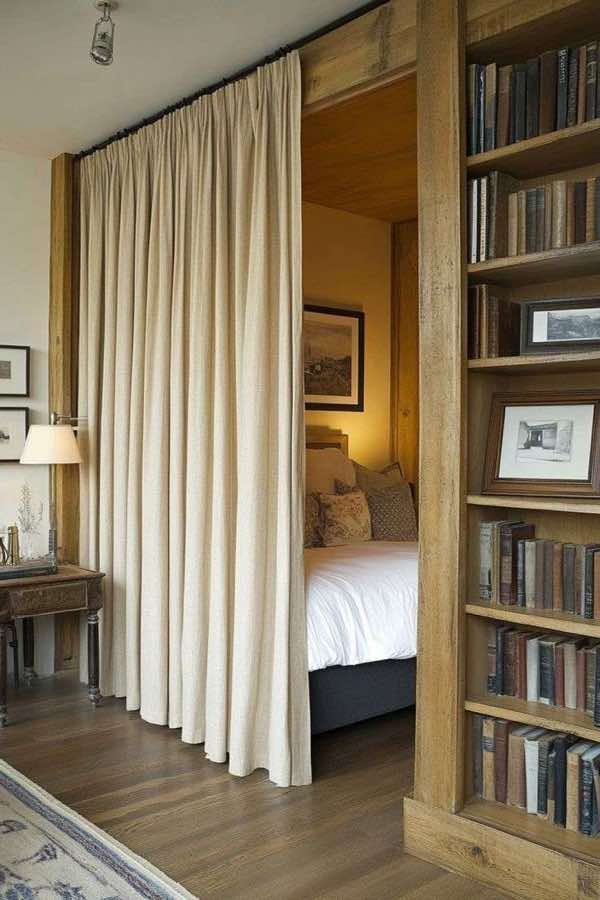
1. Use Curtains Around the Bed
Curtains are one of the most flexible ways to divide a studio apartment. They can close when you want privacy and open when you want the room to feel larger.
Lightweight curtains are best for small studios because they soften the space without blocking too much light.
Quick Tip: Choose ceiling-to-floor curtains for the most room-like effect.
2. Place an Open Bookcase Between Zones
An open bookcase creates a physical divider while still letting light pass through. It also adds valuable storage in a studio.
Use it between the bed and living area or between the entry and main room.
Quick Tip: Style the shelves lightly so the divider does not feel bulky.
3. Use a Folding Screen
A folding screen is renter-friendly because it requires no installation. Move it wherever you need privacy, then fold it away when not in use.
Screens work well beside a bed, desk, or changing area.
Quick Tip: A woven or light-colored screen keeps the room airy.
4. Float the Sofa as a Divider
Instead of pushing the sofa against the wall, use it to divide the living area from the sleeping area. The back of the sofa creates a natural visual boundary.
This layout works especially well in rectangular studios.
Quick Tip: Add a slim console behind the sofa for storage and polish.
5. Define Each Zone With Rugs
Rugs can divide a studio without adding any vertical barrier. Use one rug under the bed area and another under the living area, or choose a main rug for the seating zone.
This makes each area feel intentional even in an open room.
Quick Tip: Keep rug colors complementary so the studio still feels cohesive.
6. Use a Clothing Rack Carefully
A clothing rack can divide space and add storage, but it needs to be neat to look good. Use it for a curated capsule wardrobe rather than every item you own.
This works best in studios with limited closet space.
Quick Tip: Use matching hangers to make the rack look intentional.
7. Add a Tall Plant Divider
A row of tall plants can softly divide zones while adding life and texture. This works well between a bed and sofa or near a window.
Plants create separation without making the room feel closed off.
Quick Tip: Use plant stands to vary height and make the divider feel fuller.
8. Create a Headboard Wall
A tall headboard, upholstered panel, or low shelf behind the bed can make the sleeping area feel more contained.
This is a subtle way to create a bedroom zone without a full divider.
Quick Tip: Choose a headboard that does not overpower the room.
9. Use Lighting Changes
Lighting can separate rooms psychologically. Use warm bedside lighting near the bed, task lighting near the desk, and a floor lamp near the sofa.
Each lighting zone tells your brain how that part of the studio is used.
Quick Tip: Avoid relying on one harsh overhead light.
10. Try a Partial Curtain Behind the Sofa
A curtain does not have to cross the whole room. A partial curtain behind the sofa or beside the bed can create just enough privacy without blocking the layout.
This is helpful when you want softness more than full separation.
Quick Tip: Match curtain color to the wall for a subtle look.
11. Use a Console Table Boundary
A console table can divide an entry, living area, or sleeping zone while adding a useful surface.
It is lower than a bookcase, so it defines space without blocking sightlines.
Quick Tip: Add baskets underneath for hidden storage.
12. Create a Desk Zone With Shelving
If your studio includes a work-from-home area, use shelves above or beside the desk to visually define it.
This keeps work items contained and prevents them from spreading into the rest of the apartment.
Quick Tip: Keep office supplies in closed boxes when possible.
13. Use Different Wall Decor by Zone
Art can help define areas. Hang calming art near the bed, practical shelves near the desk, and bolder decor near the living area.
This creates subtle room identities without physical dividers.
Quick Tip: Repeat one color across zones to keep the studio connected.
14. Place the Bed Behind the Dining Area
In some layouts, a small dining table can sit between the kitchen and bed, acting as a transition zone. This makes the bed feel less exposed from the entry.
It works best with a compact table and simple chairs.
Quick Tip: Use a round table if corners make the walkway feel tight.
15. Keep Dividers Flexible
A studio apartment changes throughout the day, so flexible dividers are often better than fixed ones. Curtains, screens, rugs, and movable furniture let the room adapt.
The best divider is the one that solves privacy without stealing too much space.
Quick Tip: If the divider makes the studio feel smaller all day, try a lighter option.
Related Articles from Apartment Lift Up
- studio apartment layout ideas
- studio apartment furniture ideas
- how to decorate walls in a rented apartment
Frequently Asked Questions
How do you separate living and sleeping in a studio apartment?
Use curtains, an open bookcase, a sofa, a folding screen, or rugs to create a visual boundary between the bed and living area.
What is the cheapest way to divide a studio apartment?
Curtains, rugs, and furniture placement are usually the most budget-friendly ways to divide a studio without construction.
Do room dividers make a studio apartment look smaller?
Heavy dividers can make a studio look smaller, but open shelves, light curtains, screens, and rugs can create separation while keeping the room airy.
Final Thoughts
Dividing a studio apartment is about creating comfort, not building walls. The best solutions give you privacy and structure while keeping the space bright and flexible.
Start with the sleeping area because it usually needs the most separation, then define living, work, and dining zones with lighter visual boundaries.