
Studio Apartments / July 11, 2026
Studio Apartment Layout Ideas for Small Spaces: 15 Ways to Create Zones
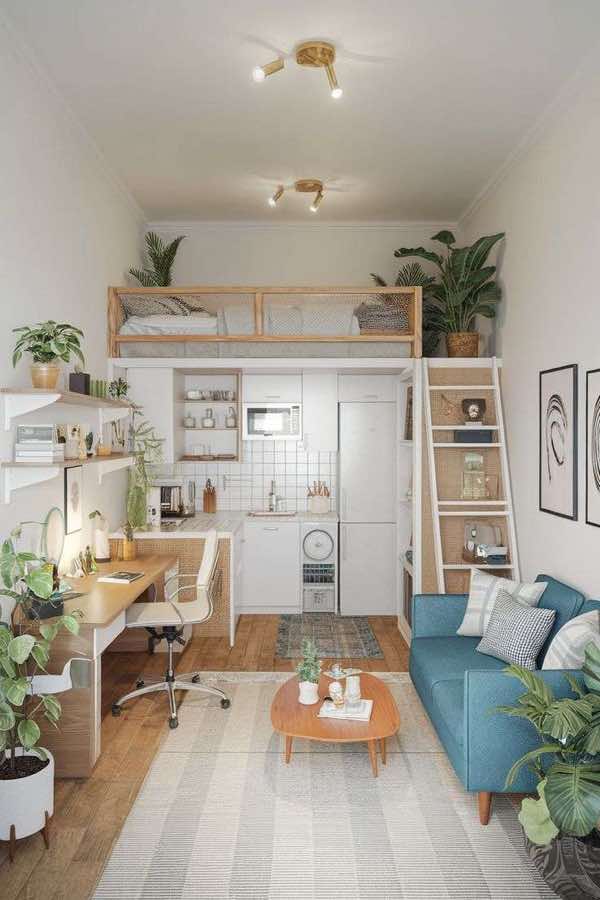
Create zones with these studio apartment layout ideas for sleeping, living, dining, working, storage, and better open-plan…
 Apartment Lift Up / guide
A studio apartment layout has to do a lot with very little separation. Without walls between the bedroom, living room, dining area, and office, the space can quickly feel like everything is happening on top of everything else.
For more ideas, you may also like our guide to studio apartment furniture ideas.
The best studio layouts create zones without closing the apartment in. Furniture placement, rugs, lighting, shelves, and visual boundaries can make one room feel organized and intentional.
These studio apartment layout ideas are designed for small spaces where every inch matters, whether you live in a 400-square-foot studio or a larger open-plan apartment.
1. Use a Rug to Define the Living Area
A rug is one of the easiest ways to create a living room zone in a studio. Place the sofa, coffee table, and accent chair around it so the area feels separate from the bed.
This visual boundary works without blocking light or movement.
Quick Tip: Choose a rug large enough for at least the front legs of the seating.
2. Place the Sofa at the Foot of the Bed
Putting the sofa at the foot of the bed creates a soft division between sleeping and living zones. The sofa faces away from the bed, which helps the room feel less like one big bedroom.
This layout works well in rectangular studios.
Quick Tip: Leave a walkway between the sofa and bed if possible.
3. Use the Bed as a Corner Zone
Placing the bed in a corner keeps the sleeping area contained and opens the rest of the room for living, dining, or working.
Add a curtain, screen, or shelf if you want more privacy.
Quick Tip: Layer pillows along the wall to make the bed feel intentional.
4. Create an Entry Drop Zone
Even a tiny entry zone can make a studio feel more organized. Use hooks, a slim table, a shoe basket, or a wall shelf near the door.
This prevents keys, bags, and shoes from spreading into the main living area.
Quick Tip: Keep the entry zone narrow so it does not block the door.
5. Put the Dining Table Against a Wall
A wall-facing dining table or drop-leaf table saves floor space while still giving you a place to eat or work. Pull it out only when needed.
This layout works well when the kitchen area is too small for a full table.
Quick Tip: Use stackable or folding chairs for flexibility.
6. Float a Bookcase Between Zones
An open bookcase can separate the bed from the living area while still allowing light through. It adds storage and division at the same time.
Style both sides because the bookcase will be visible from multiple angles.
Quick Tip: Avoid overfilling the shelves or the divider will feel heavy.
7. Keep the Center Open
A studio feels larger when the center of the room is not packed with furniture. Place larger pieces along walls and keep walking paths clear.
This makes the apartment easier to move through and less visually chaotic.
Quick Tip: If you keep bumping into a piece, the layout needs editing.
8. Use Lighting to Separate Functions
Different lighting zones can make a studio feel more layered. Use a floor lamp near the sofa, a bedside lamp near the bed, and task lighting near the desk.
Lighting helps signal how each area is meant to be used.
Quick Tip: Warm bulbs make the apartment feel more cohesive.
9. Create a Window-Focused Layout
If your studio has one strong window, arrange the main living area to benefit from that natural light. Avoid placing tall furniture directly in front of it.
A window-focused layout can make the whole studio feel brighter and larger.
Quick Tip: Use sheer curtains when privacy is needed but light matters.
10. Separate Work From Sleep
If you work from home, avoid placing the desk directly beside your pillow when possible. Even a small visual break can help the studio feel more balanced.
Use a shelf, rug, or lighting change to define the work zone.
Quick Tip: Close the laptop and clear the desk at the end of the day.
11. Use a Console Table Behind the Sofa
A console table behind the sofa can create a subtle boundary and add storage. It works especially well when the sofa floats away from the wall.
Use it for lamps, baskets, books, or a small drop zone.
Quick Tip: Choose a console no deeper than necessary.
12. Try a Hotel-Style Layout
A hotel-style studio layout places the bed, seating, desk, and storage in clearly arranged zones along the walls. This keeps the center open and the room easy to read.
It is a good approach for very small studios because it prioritizes function.
Quick Tip: Use matching finishes to keep the layout cohesive.
13. Use Curtains for Flexible Privacy
Curtains can separate the bed when you want privacy and open fully when you want the room to feel larger. Ceiling tracks, tension rods, or renter-friendly solutions may work depending on the space.
Curtains soften the room while adding function.
Quick Tip: Choose light fabric if the apartment has limited natural light.
14. Make Storage Part of the Layout
Storage should not be an afterthought in a studio. Place storage where clutter naturally happens: near the entry, bed, sofa, and kitchen.
When storage supports the layout, the apartment stays organized with less effort.
Quick Tip: Use closed storage for visual clutter and open shelves for pretty items.
15. Plan Around Daily Routines
The best layout supports how you actually live. Think about where you get dressed, eat, work, relax, and sleep, then arrange zones around those routines.
A beautiful layout will not work if it makes daily habits harder.
Quick Tip: Test the layout for a week before buying more furniture.
Related Articles from Apartment Lift Up
- studio apartment furniture ideas
- how to divide a studio apartment into rooms
- small apartment living room layout ideas
Frequently Asked Questions
What is the best layout for a studio apartment?
The best layout creates clear zones for sleeping, living, eating, and storage while keeping pathways open and natural light unobstructed.
How do you create zones in a studio apartment?
Use rugs, furniture placement, lighting, open shelves, curtains, and console tables to define zones without building walls.
Where should the bed go in a studio apartment?
The bed often works best in a corner, near the back of the room, or behind a visual divider so the main area can feel more like a living space.
Final Thoughts
A studio apartment layout should make one room feel like several useful areas without closing it off. The goal is flow, not just separation.
Start by defining the bed and living area, then add dining, work, and storage zones around your daily routines.