
Small living room Layouts / June 28, 2026
15 Small Apartment Living Room Layout Ideas That Make Every Inch Count
Designing a small apartment living room can feel like solving a puzzle. You want enough seating for guests,…
 Apartment Lift Up / guide
Designing a small apartment living room can feel like solving a puzzle. You want enough seating for guests, room to relax after a long day, and plenty of storage all without making the space feel cramped.
The good news is that a small living room doesn’t have to feel limiting. With the right layout, even the tiniest apartment can feel open, functional, and stylish. The key is arranging furniture intentionally and making the most of every square foot.
Whether you’re working with a studio apartment, a narrow living room, or a compact open-concept space, these small apartment living room layout ideas will help you maximize comfort and style.
1. Float the Sofa Away From the Wall
Many people automatically push their sofa against the wall when decorating a small apartment. While this seems like it would create more space, it can actually make the room feel less intentional.
Instead, try floating the sofa a few inches away from the wall. This creates breathing room around the furniture and gives the layout a more designer-inspired appearance.
If your apartment has an open floor plan, floating the sofa can also help define the living area without needing additional dividers.
A narrow console table behind the sofa can provide extra storage and display space while maintaining an open feel.
2. Use an L-Shaped Sectional in the Corner
A compact sectional can be one of the smartest choices for a small apartment living room.
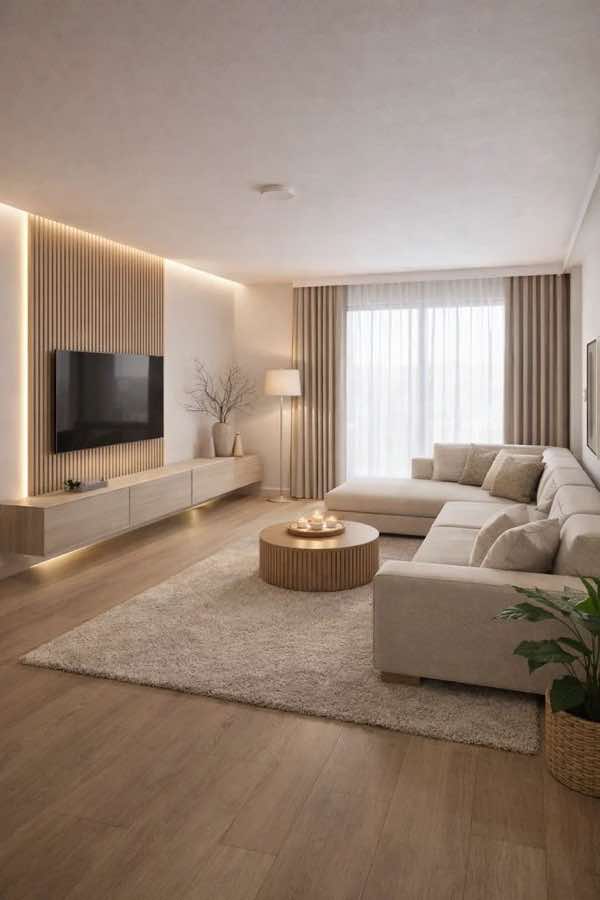
Placing an L-shaped sectional in a corner maximizes seating while keeping the center of the room open. Instead of using multiple chairs and sofas, one sectional creates a clean and efficient layout.
Choose a sectional with slim arms and raised legs to make the room feel less crowded.
This arrangement works particularly well for apartments where the living room serves as the primary gathering space.
3. Create a Conversation Layout
Rather than focusing all furniture around the television, arrange seating to encourage conversation.
Place two accent chairs across from a small sofa with a coffee table in the center. This layout feels cozy and welcoming while making the room appear thoughtfully designed.
A conversation-focused arrangement is perfect for people who entertain frequently or enjoy spending time with family and friends.
It also helps create a balanced and symmetrical appearance.
4. Position Furniture Around a Rug
A properly sized area rug can act as the foundation for your entire living room layout.
Place the front legs of your sofa and chairs on the rug to visually connect the furniture. This creates a cohesive seating area that feels intentional and organized.
Many small apartment owners choose rugs that are too small, which can make the room feel disconnected.
A larger rug often makes the entire living room appear bigger.
5. Use a Sofa and Two Accent Chairs
This classic layout works beautifully in small apartments.
Place a sofa along the longest wall and position two compact accent chairs opposite it. This arrangement creates plenty of seating without overwhelming the room.
Choose chairs with open frames or slim silhouettes to maintain an airy appearance.
The result is a balanced layout that feels both functional and inviting.
6. Center the Room Around a Window
If your apartment has a large window or beautiful view, make it the focal point of the room.
Arrange furniture to take advantage of natural light rather than blocking it. Position seating so that the window remains visible from multiple angles.
Natural light instantly makes small spaces feel larger and more welcoming.
Keeping windows unobstructed can dramatically improve the overall feel of the room.
7. Try a Studio Apartment Living Room Layout
In a studio apartment, the living room often shares space with the bedroom and dining area.
Use a sofa to create a visual boundary between zones. Positioning the back of the sofa toward the sleeping area helps separate functions without needing walls.
Adding a rug beneath the seating area further reinforces the living room zone.
This simple layout trick can make a studio feel much more organized.
8. Use Nesting Tables Instead of a Large Coffee Table
Traditional coffee tables can consume valuable floor space.
Nesting tables offer flexibility because they can be separated when needed and tucked away when not in use.
This layout solution works especially well in narrow living rooms where circulation space is limited.
The room remains functional without feeling crowded.
9. Place the TV on a Wall Mount
Mounting your television frees up floor space and creates a cleaner appearance.
Without a bulky entertainment center, the room feels more open and modern.
You can pair a wall-mounted TV with a slim floating shelf for additional storage and styling opportunities.
This layout works particularly well in contemporary apartments.
10. Use an Open Layout With Minimal Furniture
Sometimes less truly is more.
Instead of filling every corner with furniture, choose only the essentials. A sofa, coffee table, and one accent chair may be all you need.
Leaving open floor space creates a sense of freedom and prevents the room from feeling cramped.
Minimalist layouts often make small apartments feel significantly larger than they actually are.
11. Add a Storage Ottoman Instead of a Coffee Table
A storage ottoman serves multiple purposes at once.
It can function as a coffee table, extra seating, footrest, and hidden storage solution.
This versatility makes it one of the best furniture choices for small apartments.
Reducing the number of individual furniture pieces helps keep the layout clean and uncluttered.
12. Create Symmetry Whenever Possible
Symmetry naturally makes spaces feel more balanced and organized.
Matching side tables, lamps, or chairs create visual harmony that makes a room appear professionally designed.
Even in a small apartment, simple symmetrical arrangements can have a surprisingly big impact.
The room feels calmer and more intentional.
13. Use Vertical Space
When floor space is limited, look up.
Tall bookshelves, floating shelves, and wall-mounted storage help maximize functionality without crowding the room.
Vertical elements also draw the eye upward, making ceilings appear taller.
This simple trick helps small living rooms feel more spacious.
14. Position Furniture to Improve Traffic Flow
One of the biggest mistakes in small apartments is blocking natural walking paths.
Arrange furniture so people can move comfortably through the room without weaving around obstacles.
Good traffic flow makes the space feel larger, more comfortable, and easier to use every day.
Always consider how people will move through the room before finalizing your layout.
15. Define the Living Room With a Console Table
A console table behind the sofa can help define the living room in open-concept apartments.
It creates a visual separation between spaces while providing a surface for lamps, books, and decorative accessories.
This layout technique adds structure without making the room feel closed off.
It’s especially useful in studio apartments and loft-style spaces.
Frequently Asked Questions
What is the best layout for a small apartment living room?
The best layout depends on the room’s shape, but arrangements that prioritize open pathways, multifunctional furniture, and clearly defined seating areas usually work best.
How do I fit more seating into a small living room?
Consider sectionals, storage ottomans, nesting furniture, and compact accent chairs instead of bulky sofas.
Should furniture touch the walls in a small living room?
Not always. Pulling furniture slightly away from walls can actually make the room feel larger and more thoughtfully designed.
Final Thoughts
A small apartment living room doesn’t have to feel crowded or restrictive. With the right layout, you can create a space that feels comfortable, functional, and stylish regardless of square footage. Focus on maximizing flow, choosing multifunctional furniture, and creating defined zones that support the way you live. Even a few small layout adjustments can completely transform the feel of your living room.