
Budget & DIY Decor / August 31, 2026
Apartment Materials and Finishes Guide: How to Create a Cohesive Home
Choose coordinated apartment materials and finishes by auditing fixed surfaces, limiting metals and wood tones, and building a practical fabric…
 Apartment Lift Up / guide
Apartment materials and finishes look cohesive when you limit the visual system before you shop. Choose one primary metal, one or two compatible wood tones, and a small family of natural-feeling fabrics, then repeat those choices across the rooms that share a sightline.
Short answer: begin with the finishes that cannot change, choose a restrained palette, compare samples in the actual light, and vary texture rather than collecting unrelated colors. The goal is not to make every item match. It is to make the apartment feel intentionally related.

Why finishes matter more in an apartment
A compact apartment often has several rooms visible at once. The metal on a kitchen handle may sit in the same sightline as a living-room lamp. The wood tone of a console may be next to the floor, dining chairs, and bedroom furniture. When each purchase is attractive on its own but unrelated to the others, the whole home can feel unsettled.
A finish system solves that problem without requiring identical furniture. It gives you a filter for buying, rearranging, and editing. The system should be loose enough to feel lived in but clear enough to prevent every new purchase from introducing another material family.
Audit the finishes that must stay
Walk through the apartment and list the fixed surfaces first. Include floors, cabinets, counters, tiles, faucets, door hardware, window frames, appliances, and built-in lighting. Photograph them in daylight and after dark. Undertones that are invisible at noon may become obvious beside a warm lamp.
- Mark warm, cool, light, and dark wood tones.
- Note whether existing metals are shiny, brushed, matte, black, brass, nickel, or mixed.
- Record stone, tile, countertop, and cabinet colors.
- Identify repeated surfaces that connect two rooms.
- Separate finishes you can change from finishes you must work with.
Do not start by buying an entirely new palette. Start by naming what already exists. A good material plan reduces conflict between fixed surfaces and movable pieces.
Choose a primary metal finish
Metal is visually strong even when the object is small. A lamp, cabinet pull, faucet, frame, or chair leg can repeat a finish across the apartment. Choose one dominant tone such as matte black, brushed nickel, or brushed brass, then allow a small amount of variation where existing hardware cannot be changed.
Matching every metal is not required. The important decision is which finish appears most often and whether the exceptions look deliberate. If the kitchen already has brushed nickel, adding a brass lamp can work when the brass is repeated in art or accessories. If every room introduces a new metal, the apartment loses a clear visual rhythm.
Metal finish questions to ask
- Does the finish repeat in at least two rooms?
- Does it suit the fixed hardware that cannot be replaced?
- Will fingerprints, water spots, or wear be visible where it is used?
- Can a renter reinstall the original hardware at move-out?
- Is the item easy to clean and maintain?
Coordinate wood tones without making the home bland
Wood tones can be warm, cool, pale, honeyed, reddish, gray, or nearly black. Mixing them is possible, but random mixing is usually what makes a small apartment feel disjointed. Compare large surfaces first, such as flooring and cabinets, then choose furniture that either relates closely or contrasts clearly.
When two woods are close but not quite the same, they can look accidental. A stronger contrast often feels more intentional. A pale oak shelf beside a dark walnut table can create a clear relationship when the rest of the room stays quiet. If the floor is already visually busy, simpler wood furniture may provide relief.

Build a fabric family
Fabric is one of the easiest ways to connect rooms because it can change without construction. Linen, cotton, wool, jute, canvas, velvet, and woven materials each catch light differently. Choose two or three textures to repeat rather than buying one of every available fabric.
Use fabric by function. Curtains control light and privacy. Rugs define zones and soften sound. Bedding changes comfort. Cushions and throws add smaller layers. Storage baskets can provide texture while hiding daily items. A material becomes more valuable when it improves the way the apartment works.
Useful fabric pairings
- Linen curtains with a wool or cotton throw.
- Jute or flatweave rug with a smooth wood table.
- Canvas storage with soft bedding.
- Woven basket with ceramic or glass accessories.
- Upholstered seating with a harder metal or wood side table.
Use contrast in surface finish
Surface finish is different from color. A matte wall, glazed ceramic, brushed metal, natural wood, and soft fabric can share a similar color while still creating visual depth. This is especially useful in a small room where too many colors can feel busy.
Place a rougher or more tactile material beside a smooth one. A woven basket can keep a glossy cabinet from feeling sterile. A ceramic lamp can soften a metal table. A linen curtain can reduce the hardness of a large window. Contrast should be visible from the main viewing angle, not hidden behind furniture.
Materials by room
Living room
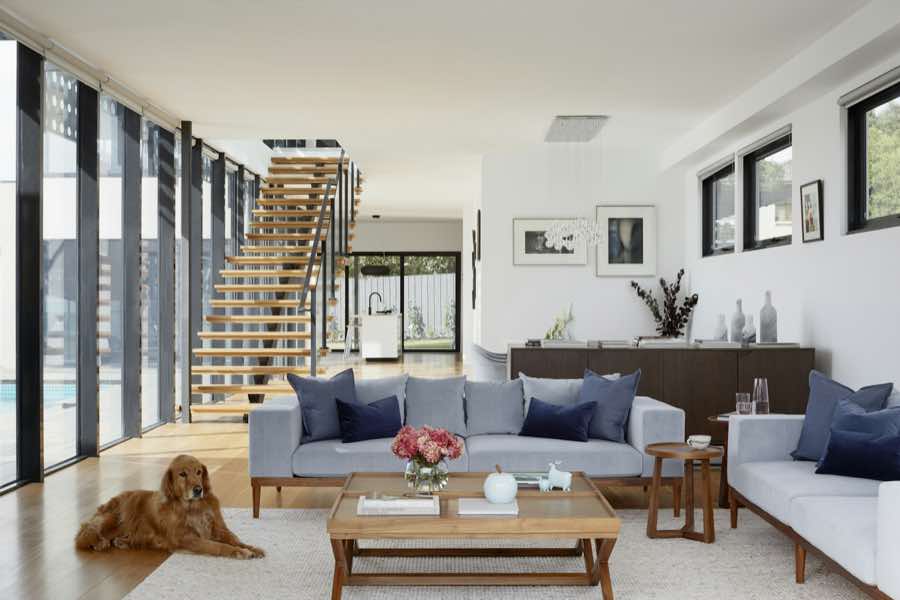
Use the rug, sofa, coffee table, and lighting as the main material story. If the sofa is smooth and large, add a woven rug or textured throw. If the rug is patterned, let the table and lamps stay quieter. Keep accessories useful and avoid placing too many small finishes in the same sightline.
Bedroom
Prioritize comfort and calm. Bedding, curtains, a headboard, and bedside tables should feel related even when they are not a set. Use one darker anchor, one soft textile, and one natural material to keep the room from feeling flat.
Kitchen and bathroom
These rooms contain hard, frequently cleaned surfaces. Add warmth with wood cutting boards, washable runners, woven storage, matching towels, and one plant where light and humidity allow it. Keep materials away from heat and water when the product instructions require it.
Entryway and workspace
Use durable, easy-to-clean finishes first. A slim console, framed mirror, hooks, a washable mat, and a simple lamp can create a complete entry. At a workspace, prioritize the chair and desk surface, then hide cables and add one tactile element that does not interfere with concentration.

Renters and the finish system
Renters can change the material story through portable pieces: rugs, lamps, curtains, bedding, art, baskets, mirrors, furniture, and hardware that can be reinstalled. Check the lease before changing paint, faucets, cabinet hardware, or mounted fixtures. Keep every original part in a labeled bag and record where it belongs.
Do not assume that a removable product works on every surface. Read the manufacturer’s instructions for paint, tile, wood, humidity, weight, and removal. If a product is difficult to reverse, ask the property manager before installing it.
How to shop without collecting mismatched pieces
- Photograph the room and fixed finishes.
- Choose a primary metal and a small fabric family.
- Measure the item and the route it must travel through the apartment.
- Compare the finish in actual daylight and lamplight.
- Buy one anchor item before buying accessories.
- Repeat one material in another room where it makes sense.
- Remove one item when a new purchase creates visual crowding.
| Finish decision | Good question | Common mistake |
|---|---|---|
| Metal | Which finish will repeat most often? | Introducing a new metal with every lamp or frame |
| Wood | Does the tone relate or contrast clearly with the floor? | Choosing near-matching tones that look accidental |
| Fabric | Does the material improve comfort or function? | Adding texture only as decoration |
| Surface | Does the finish add useful visual contrast? | Making every surface glossy or perfectly smooth |
Finish choices also need to survive real routines. A beautiful surface that shows every fingerprint may not suit a busy kitchen. A fragile textile may not work beside a pet door or entry path. A pale rug can be a good choice when it is washable and appropriately sized, but not when it creates daily anxiety. Practical design is not a compromise after style; it is the test that allows style to last.
How to use a finish board
Create a small board with a photograph of the floor, a cabinet or countertop sample, the dominant metal, a wood sample, and two or three fabrics. Look at it in the morning, afternoon, and evening. Remove anything that competes with the fixed finishes. Then choose one anchor purchase, such as a rug, sofa, bed frame, or curtains, and use it to test the rest of the system.
For a rental, make a second list of reversible items. Include furniture, lamps, curtains, rugs, baskets, art, bedding, and removable accessories. Mark anything that needs permission, drilling, adhesive, or a change to an existing fixture. This turns the finish board into a decision tool rather than a mood board that encourages unplanned shopping.
When to break the rules
Rules are filters, not laws. A home can mix metals, wood tones, and fabrics when the reason is clear and the overall composition remains calm. Break the palette when an inherited piece, a meaningful object, or an existing finish deserves to stay. The goal is an apartment that feels considered and personal, not a showroom with no variation.
Use repetition to make a small apartment feel settled. A warm wood tone can appear in a tray, shelf, and chair without every piece being the same. A woven texture can move from the living room basket to the bedroom hamper. One metal finish can repeat in a lamp and a frame. These small echoes help the eye connect rooms that are not large enough to have completely separate identities.
Also plan for replacement. High-use textiles need washing and may eventually wear out. Choose a finish family that allows a rug, curtain, or cushion to be replaced without forcing a full redesign. Durable, adaptable choices protect the budget and make the apartment easier to live with through changes in taste, tenants, and seasons.
Before you buy, put the finish board beside the room’s main viewing angle. A piece that looks calm in a close-up may become distracting when repeated across a small open-plan space. Edit the strongest contrast first, then let the remaining materials support the room’s actual function.
A cohesive finish plan should leave room for ordinary life. Shoes, dishes, books, cables, laundry, and daily tools will still appear. Choose materials that can be cleaned, repaired, moved, and replaced. That practical flexibility is what makes an apartment feel resolved rather than staged.
Apartment Materials and Finishes: Build the System
Apartment materials and finishes should be chosen as a small system. Compare the fixed surfaces first, then coordinate wood, metal, fabric, and care requirements.
Frequently Asked Questions
How many finishes should an apartment use?
Two or three dominant finish families are a useful starting point. That might mean one metal, one or two wood tones, and a small group of repeated fabrics. Existing fixed finishes may require exceptions.
Can warm and cool wood tones work together?
Yes, when the contrast is intentional and repeated. Avoid choosing two woods that are almost the same but not quite. Compare them beside the fixed floor and cabinets before buying.
Do all metals need to match?
No. Choose a dominant metal and use exceptions with intention. Repeating the secondary finish at least once can make the contrast look deliberate.
What materials make a small apartment feel warmer?
Textiles, woven storage, natural wood, ceramic, rugs, and plants add tactile contrast to hard surfaces. Choose pieces that also support storage, comfort, light control, or daily use.

Useful Sources And Verification
This article offers general home-planning guidance. Verify lease rules, product instructions, and any safety requirements for your building before acting.